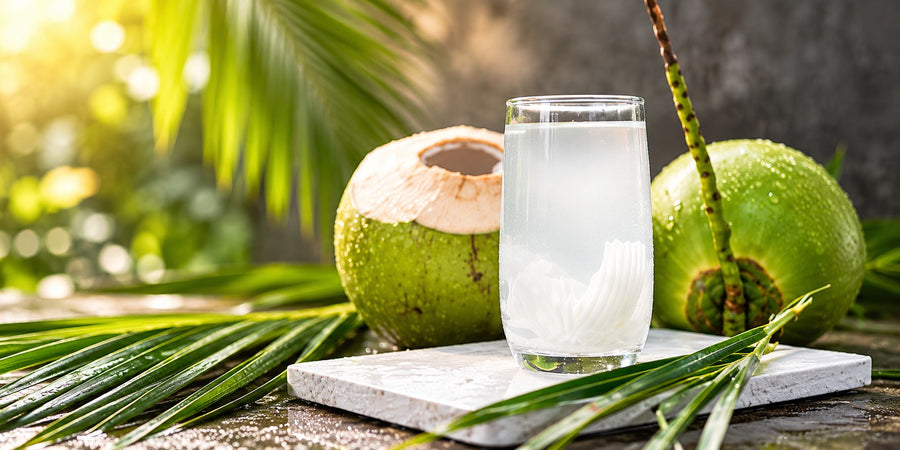
Ask five people whether coconut water settles the stomach and you will get five confident answers. One friend swears it fixes her acidity every summer. Another says a single glass leaves him feeling like he’s swallowed a balloon. Annoyingly, both of them can be right.
Coconut water for digestion sits in a grey area. A few of its benefits are real, a few are stretched, and a fair number have never been properly tested. This guide sorts them into piles, so you know what to expect before you open the next bottle.
The short answer: Coconut water can be gentle on the gut and may soothe mild acidity for some people. It can also cause gas and heaviness when you drink too much, too cold or too fast. For most healthy adults, one glass of about 200 to 300 ml a day is a sensible ceiling.
What is actually inside a glass of coconut water?
The coconut water most people drink comes from young green coconuts, picked at around six to seven months. A Times of India piece featuring a US gastroenterologist describes it as roughly 94% water with very little fat, and puts its glycaemic index at about 42. Vinmec hospital’s guide adds that a 240 ml serving carries around 600 mg of potassium, along with smaller amounts of magnesium, calcium and sodium.
So it isn’t plain water wearing a coconut costume. It’s a light, mildly sweet drink with minerals and natural sugar in it, which is why Ayurvedic texts call it cooling and heavy rather than neutral.
Everything in this article assumes the bottle holds just that and nothing else. A coconut water that is 100% pure, with no added sugar, flavouring or concentrate, behaves the way the research describes. A sweetened one doesn’t. AmourCoco lists its coconut water as 100% natural, and whichever brand you end up choosing, read the ingredients yourself rather than trusting the front of the pack.
Does coconut water help digestion?
Yes, in a modest way. Hydration is the main reason. A gut that’s short on fluid slows down, and stools get harder to pass. The gastroenterologist quoted by Times of India says coconut water supports gut motility and that its electrolytes help digestion along. Nutritionist Lisa Richards, speaking to Yahoo, points to potassium and magnesium as nutrients that can reduce water retention, which is one route to feeling less puffy.
Online, the claims go further. You will see it said that lauric acid in coconut water turns into monolaurin and protects the stomach. The catch is that lauric acid lives mostly in the coconut flesh and oil, while the water itself carries very little fat.
What about constipation and loose stools?
Vinmec describes coconut water as a natural laxative, and that fits what many people report: a bigger serving can loosen things up. If you’re a bit backed up, that’s useful. If you’re not, it’s a surprise you didn’t ask for.
The opposite problem needs more care. Coconut water replaces some fluid and electrolytes after a mild bout of diarrhoea, but Jiva’s medical review is clear that it is not a stand-in for oral rehydration salts when vomiting or diarrhoea is serious. If you can’t keep fluids down, or it’s a child or an older adult, skip the experiments and get proper rehydration advice.
Does coconut water cause bloating?
It can, and the reasons are pretty ordinary. Vinmec notes that a large amount in one sitting fills the stomach with fluid and leaves you heavy and swollen. Then there’s the sugar. Coconut water holds natural sugars and some sorbitol, a sugar alcohol that certain guts ferment into gas, which is why people with irritable bowel symptoms often notice it first. Temperature plays a part as well. Jiva Ayurveda likens an ice-cold drink on a sluggish stomach to putting out a fire with wet sand. That’s dramatic, but plenty of people do find fridge-cold drinks sit badly.
If bloating is your primary concern, try sipping half a glass at room temperature mid-morning. If you still blow up like a puffer fish, your gut simply doesn’t agree with it, and that’s a perfectly good answer.
Does coconut water help acidity?
Some people feel better after a glass. Hospital diet sheets for hyperacidity often list it among cooling foods, and Jiva links acidity to excess internal heat, which coconut water is said to calm. That’s experience and tradition, though, not trial data.
The “alkaline” label deserves a raised eyebrow too. Coconut water is mildly acidic, usually somewhere around pH 5. What probably helps is dilution and the soothing, cool feeling, not any neutralising effect. Mature brown coconuts are another story: Jiva notes their water is heavier, harder to digest and more likely to cause gas and acid trouble than the light water from a green one.
If heartburn turns up more than a couple of times a week, a drink won’t fix it. A pharmacist or GP is the better next stop.
Fact or myth: five claims you’ll keep hearing
- “It cures acidity.” Myth. Mild relief for some people, nothing more dependable than that.
- “It’s a natural laxative.” Partly true. Larger servings can loosen stools, for better or worse.
- “It has basically no calories.” Myth. It carries real calories and natural sugar, which add up if you’re drinking it by the litre.
- “It replaces ORS.” Myth. For serious vomiting or diarrhoea, a proper oral rehydration solution is the safer pick.
- “Fresh is always better.” Mostly true. It’s less processed and has no added sugar, but only if it really is fresh.
When and how much should you drink?
For most healthy adults, about 200 to 300 ml a day, or one coconut, is plenty. Vinmec sets the upper limit at one to two coconuts, but Jiva’s lower figure is the easier one to live with if your stomach is touchy.
Morning and afternoon work better than late evening. Both Vinmec and Jiva steer people away from drinking it at night, since it sends you to the loo and, according to Jiva, can leave you feeling puffy by morning. On an empty stomach, sip rather than gulp. Skip the added sugar, because the natural sweetness is already doing the job. And try not to pair it with a heavy, oily or very spicy lunch, when your stomach is already working hard.
Fresh coconut water in the UK: what are your real options?
Finding fresh coconut water in UK supermarkets is hit and miss. Green tender coconuts turn up at some Asian, Caribbean and African grocers and a few market stalls, usually at a price, and once one is opened the water doesn’t keep. Jiva’s rule is simple: if it smells sour, tastes fermented or looks cloudy, bin it.
That’s why many people settle on a packed version for everyday use. If you’d rather skip the hunt and buy coconut water online, UK shoppers have a few routes. There’s the AmourCoco website, the brand’s Amazon store, and its listings on eBay and Etsy.
The checks are the same wherever you shop: a short ingredients list, no added sugar, a clear best-before date, and storage instructions you’ll genuinely follow.
Who should slow down?
Coconut water is rich in potassium, so people with kidney disease, anyone on certain blood pressure medicines, and people watching their blood sugar need a more careful approach. Babies under six months shouldn’t have it either. We’ve covered each group properly in our guide on who should be careful with coconut water, so check it before making this a daily habit.
The bottom line
Coconut water is a decent, gentle drink that suits many stomachs and annoys a few. It hydrates, it may ease mild acidity, and it can nudge digestion along. It will not cure reflux, replace rehydration salts or work miracles at three glasses a day.
Start small, pick a pure one, drink it earlier in the day, and let your own gut be the judge. If you want to look at a pure option, start at AmourCoco.