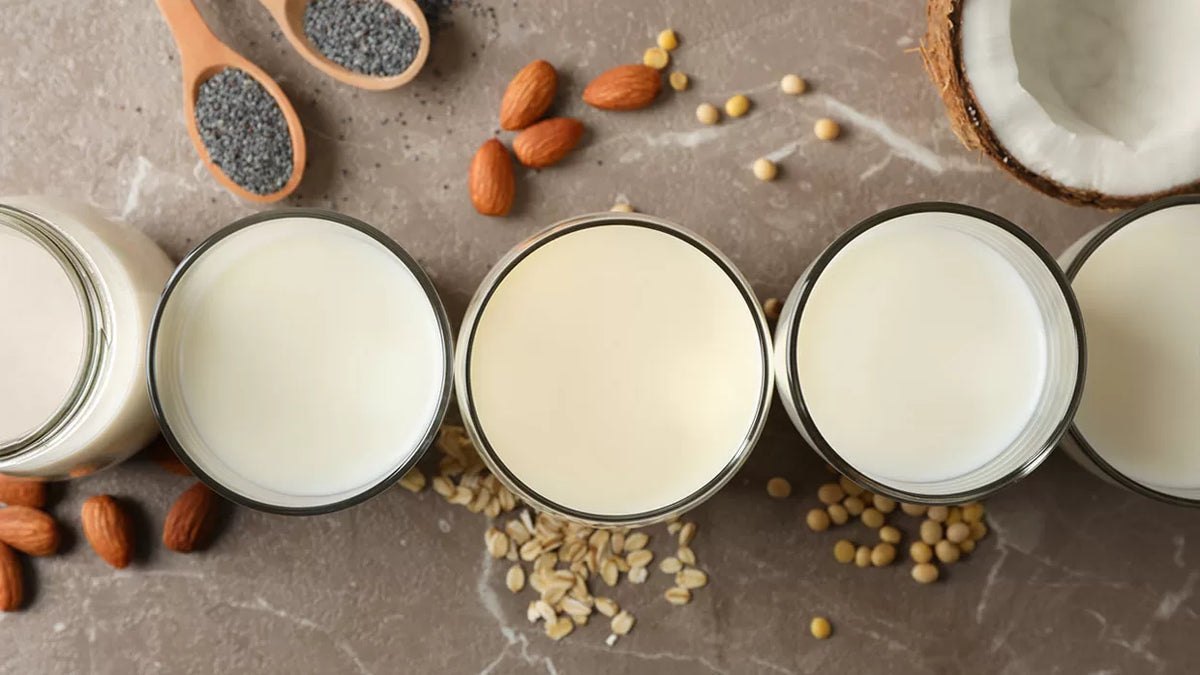
Use full-fat coconut milk when you want rich, thick, dessert-style results, and low-fat coconut milk when you want a lighter sauce, soup or everyday curry. The two are made from the same ingredient, but the fat content changes how they cook, taste and set. This guide compares low-fat vs full-fat coconut milk on calories, texture and cooking results, so you can pick the right one for what’s in your pan. If you’re after a lighter option, AmourCoco low-fat coconut milk is the one used across our curry, soup and pancake recipes.
What Is the Difference Between Low-Fat and Full-Fat Coconut Milk?
The difference is how much coconut extract is in the can: full-fat contains more, while low-fat is diluted with water, so it ends up thinner and with often roughly half the fat. Both are dairy-free and made from the same coconut flesh.
That dilution changes more than the nutrition panel. Full-fat coconut milk separates into a very thick cream on top and a thinner liquid below, while low-fat stays smoother and more uniform overall . It also tastes milder, which can be an advantage when you don’t want coconut to dominate a dish.
Coconut Milk Calories and Fat Compared
A typical full-fat coconut milk has around 165 calories and 17g of fat per 100ml, while a low-fat version has around 90 calories and 9g of fat. For a standard 400ml can, that is a difference of roughly 300 calories, which adds up in a family curry.
Labelling isn’t standardised, though. Some products marked “light” still contain a fair amount of fat, so always compare the fat per 100ml rather than relying on the front of the pack.
Which Is Better for Curries and Soups?
Low-fat coconut milk is better for everyday curries, soups and stews, where you want creaminess without heaviness. Full-fat suits rich, restaurant-style curries where a thick, glossy sauce is the goal.
Low-fat works well in recipes like our coconut peanut chicken curry, creamy coconut chicken and sweet potato and coconut soup, because the other ingredients already add body.
A few tips for getting the best from it:
- Keep the heat gentle. Low-fat coconut milk can split if it boils hard, so aim for a steady simmer.
- Shake the carton or can first. It separates as it sits, and shaking keeps the sauce even.
- Reduce or thicken if needed. Simmer a little longer, or stir in a teaspoon of cornflour mixed with cold water, to get a thicker sauce. Our guide on how to thicken coconut milk curry covers more options.
Which Is Better for Baking and Desserts?
Full-fat coconut milk is better for desserts that need to set, whip or taste indulgent, because the fat is what gives them structure and richness. Low-fat suits batters and drinks where a lighter result is fine.
Our vegan coconut panna cotta is a good example: it needs the fat in full-fat coconut milk to set into a silky, spoonable texture. Low-fat coconut milk would give a thinner, jelly-like result. On the other hand, coconut milk pancakes work beautifully with the lighter option, since a thin batter is exactly what you want.
Can You Substitute Low-Fat for Full-Fat Coconut Milk?
You can swap them one-for-one in most cooked savoury dishes, but expect a thinner, lighter result. In desserts that need to set or whip, the swap usually doesn’t work.
If you want to keep the richness while using low-fat, stir a spoonful of coconut cream into the finished dish. Our guide on coconut milk vs coconut cream explains how the two differ.
Is Low-Fat Coconut Milk Healthier?
Low-fat coconut milk has fewer calories and less saturated fat per serving, which helps if you are watching either, but “healthier” depends on how you use it. Full-fat is more filling, so a smaller amount can go a long way.
Coconut fat is mostly saturated, and NHS guidance recommends limiting saturated fat, at no more than about 30g a day for men and 20g for women. If you cook with coconut milk often, the lighter version makes that easier to manage. For an occasional rich dessert, full-fat is perfectly reasonable.
How to Choose: A Quick Guide
- Choose low-fat for the weeknight curries, soups, stews, smoothies, pancakes and porridge.
- Choose full-fat for panna cotta, puddings, ice cream, whipped toppings and for thick curries.
- Keep both in the cupboard if you cook a mix of savoury and sweet dishes.
Where to Buy Coconut Milk
If you want to buy coconut milk online UK shoppers can rely on, start with a simple, clean label and check the fat per 100ml against what your recipe needs. You can order AmourCoco low-fat coconut milk directly, browse the full AmourCoco coconut milk range, or find AmourCoco coconut milk on Amazon UK.
For recipe ideas and cooking videos, follow AmourCoco on Instagram, and you can also find AmourCoco on Google.
The Bottom Line
For most everyday cooking, low-fat coconut milk gives you creaminess with a lighter result, and it’s the easier choice for curries, soups and pancakes. Keep full-fat for the dishes that need richness or structure, like panna cotta and thick, restaurant-style curries. Check the fat per 100ml on the label, and pick the one that suits the dish.
This article is for general information and isn’t medical advice. Speak to your GP or a registered dietitian if you follow a restricted diet.